Article: How to Choose a Moisturizer for Sensitive Skin: An Ingredient Label Guide
How to Choose a Moisturizer for Sensitive Skin: An Ingredient Label Guide
Quick Answer:
When choosing a moisturizer for sensitive skin, prioritize a formula that feels comfortable, provides hydration, and avoids known triggers or allergens. Fragrance-free products are often a good starting point. Ingredient lists help you screen for allergens, but no single “clean” label or short formula guarantees tolerance.
First, read beyond the front of the package
Words such as “gentle,” “natural,” and “clean” do not tell you how your skin will respond. Look at the full ingredient list, the product's intended use, and any specific claims supported by testing. If you have a known contact allergy, learn its ingredient name and check for it every time.
What do ingredient lists reveal?
Cosmetic ingredients generally appear in descending order of predominance, with special rules for ingredients at low concentrations. Placement alone cannot tell you whether an ingredient is effective or irritating. A beneficial ingredient can work at a relatively low concentration, and a well-formulated product may have a longer ingredient list.
Ingredients worth recognizing
- Humectants — like hyaluronic acid and glycerin. Glycerin is a humectant that helps attract water and support skin hydration. Glycerin supports the skin’s microbiome. Healthy skin has a diverse microbiome and includes bacteria that protect us. Changes in the microbiome are seen in skin conditions like eczema, rosacea, psoriasis, and seborrheic dermatitis.
- Emollients — like cholesterol, fatty acids, and squalene — help soften skin and improve how a product feels. Fatty acids that are higher in linoleic acid than oleic acid (such as grape seed oil and prunus domestica) are better for the skin barrier and sensitive skin. Olive oil, which is high in oleic acid, can disrupt the skin barrier.
- Occlusives — like dimethicone, silicone, beeswax, algae derived wax, petroleum — reduce water loss.
- Niacinamide — clinically studied and used in skin care formulas to reduce the dark spots and calm inflammation in redness prone and sensitive skin.
- Oat kernel extract — clinically studied and used in formulas to reduce visible redness and support the skin barrier. Commonly included in soothing formulations.
- Stearyl glycyrrhetinate — a licorice-derived ingredient clinically studied and used in formulas aimed at calming the skin.
Ingredients and product types to approach carefully
- Added fragrance and essential oils — common sources of reactions for some people; “natural” fragrance can still be irritating.
- Harsh scrubs and over-exfoliation — can aggravate an already uncomfortable complexion.
- Highly active formulas — acids and retinoids may be useful for specific concerns but require careful introduction when skin is reactive.
- Known allergens — your own allergy history matters more than blanket “avoid” lists.
- Alkaline products — traditional bar soaps and classic foaming cleansers with anionic surfactants can irritate sensitive skin.
Is fragrance-free the same as unscented?
Not always. “Unscented” products may contain masking ingredients. “Fragrance-free” or “no added fragrance” is usually more helpful for someone trying to avoid added scent, but always read the full ingredient list, especially if you have a confirmed fragrance allergy.
Does a shorter ingredient list mean a better moisturizer?
No. Formulation, concentration, preservation, and individual tolerance matter more than the total number of ingredients.
What does ComposeRx mean by the SAFE Standard?
The ComposeRx SAFE Standard emphasizes skin barrier support and formulation without common allergenic preservatives, added fragrance, or essential oils. It is a formulation philosophy, not a promise that nobody will ever react. Any product can be unsuitable for an individual with a specific sensitivity.
A real example: Vital Repair Hydrating Moisturizer
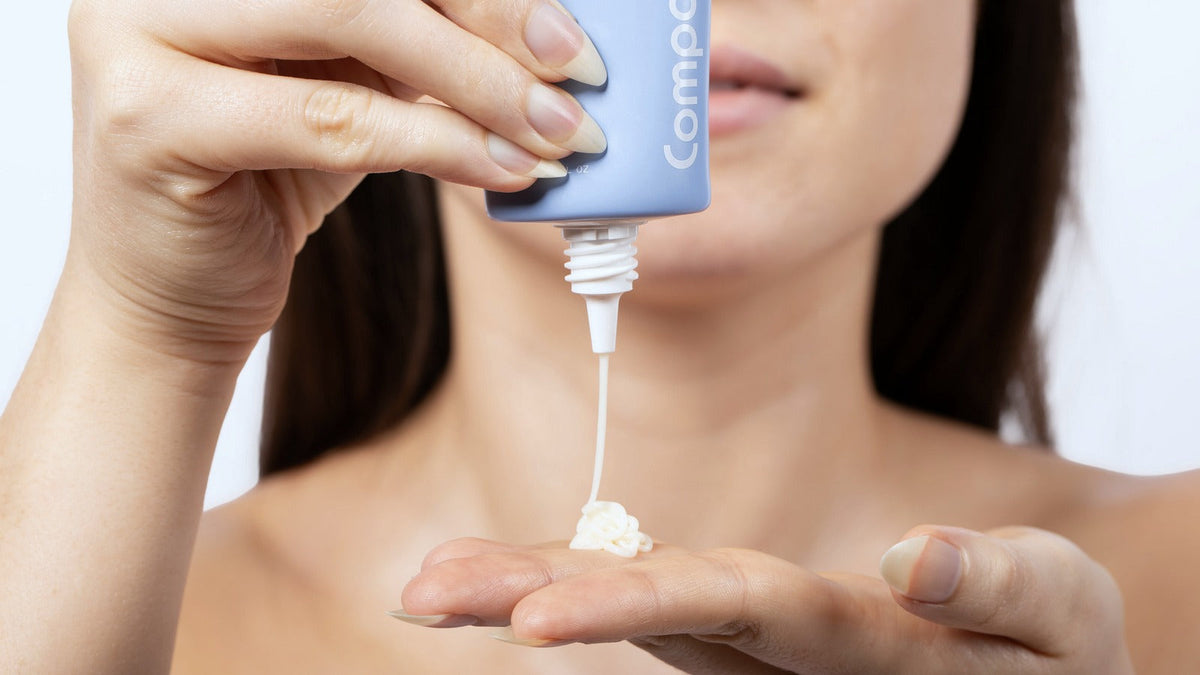
Vital Repair's ingredient list includes glycerin, niacinamide, oat kernel extract, squalane, and stearyl glycyrrhetinate. Its formula is made without added fragrance or essential oils. Rather than asking customers to trust an adjective on the label, ComposeRx publishes the complete ingredient list and summarizes the product's clinical testing.
In an 8-week open-label study involving 11 participants with rosacea, 91% decreased transepidermal water loss at week 4 and 82% had a clinically meaningful* measured reduction in facial redness at week 8 using a DSM Colorimeter. In a separate 102-person repeated-insult patch test with 57% of subjects with self perceived sensitive skin, Vital Repair was found to be non-irritating and non-sensitizing. These are promising but limited data; personal results and tolerance vary.
*Based on published validation and reliability studies of Cortex ColorMeter/DermaSpectrometer instruments, an absolute change of ≥2 Erythema Index (EI) units represents a reasonable threshold for distinguishing potentially meaningful changes in skin erythema from ordinary measurement variability.
These statements have not been evaluated by the Food and Drug Administration. This product is not intended to diagnose, treat, cure, or prevent any disease.
Frequently asked questions
Can plant extracts irritate sensitive skin?
Yes. Plant-derived and “natural” does not automatically mean non-irritating. Poison Ivy is also natural.
Do I have to avoid every active ingredient?
No. Introduce products based on your skin's needs and tolerance, and ask a dermatologist about stronger treatments.
How should I test a new moisturizer?
Try a small amount on a limited area for several days before broad use. If you have suspected allergy or repeated reactions, ask about formal patch testing.
Can a moisturizer replace treatment for eczema or rosacea?
No. Moisturizer can support everyday skincare, but diagnosed inflammatory conditions may need medication or other treatment.
The takeaway
The most useful label-reading skill is knowing your own triggers. Seek hydration, evidence, transparency, and a formula you want to use every day.
Medical note: Educational information only, not individualized medical advice.